
Clinically reviewed by Chris Mosunic, PhD, RD, MBA, Chief Clinical Officer, Calm
Unlike the characters in Severance, we don’t have the luxury of splitting our lives neatly in two; our personal world comes to work with us every day. The ups and downs in our lives affect the way we show up at work and get things done.
That’s good news for employers when employees are feeling well: 8 in 10 say they’re more productive when they’re feeling healthy and happy. But what happens when they’re not? How do common life challenges affect people at work and, more importantly, how can employers better support their well-being and productivity?
To find out, Calm surveyed 1,500+ full-time employees in the US and the UK. What we found suggests that employers need to fill foundational gaps in mental health benefits to meet the holistic needs of employees. They also could be more proactive in supporting the well-being of employees so they’re better equipped to cope with health or life challenges.
Chronic health conditions are common and have a ripple effect
According to our survey, more than half of employees (54%) have at least one physical health condition, such as high blood pressure or heart disease (24%), diabetes or pre-diabetes (11%), arthritis (11%), chronic pain (9%), COPD (7%), or cancer (3%).
These conditions often make an impact well beyond the physical health of employees, affecting their mental, emotional, and financial health as well as the overall health of the organization.
Employees with chronic conditions are more likely to have emotional and mental health challenges
More than 35% of workers living with a chronic condition described their mental and emotional health as fair or poor, which far exceeds the rates among employees navigating short‑term illness or even severe injury. This connection highlights the cumulative psychological strain that can stem from dealing with long-term physical health issues.
Comorbid physical and mental health challenges are costly to employees and employers
Moreover, comorbid physical and mental health challenges often lead to substantial, unforeseen personal expenses that many employees are unprepared to manage. Forty-eight percent of employees with a chronic condition said they faced a major unexpected expense, and 40% rated their financial security fair or poor because of a health condition. Financial instability or insecurity is a top source of stress and anxiety for employees, and only one-third of survey respondents rated their financial security very good or better.
For organizations, the implications are equally significant.
- When mental health conditions occur alongside other health issues, the total cost of care can increase two to eight times.
- Productivity losses are also common among employees with chronic conditions and mental health issues, and they result in indirect costs for organizations.
- Among employees with a chronic health issue,
- 60% feel less productive than usual,
- 62% have trouble concentrating or focusing, and
- 61% feel they’re not performing at their best.
- Among employees with a mental or emotional health issue,
- 68% feel less productive than usual,
- 68% have trouble concentrating or focusing, and
- 67% feel they’re not performing at their best.
- Among employees with a chronic health issue,
Everyday stressors have a profound impact on people at work, Calm’s survey shows.
Download the report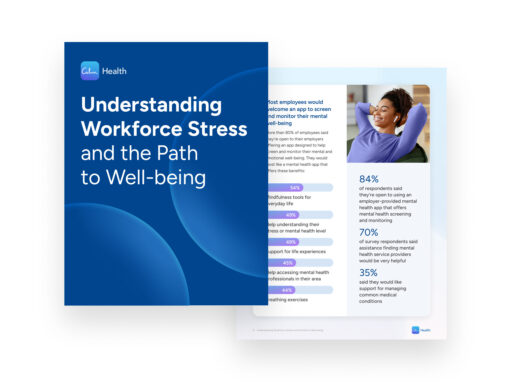
Common life events also affect productivity
Like chronic health conditions, significant life events have a far-reaching impact on worker well-being and productivity. Nearly 80% of respondents reported experiencing a major life event in the past year, and 44% said life experiences negatively impact their performance at work. Illness or death of a loved one or pet, divorce, moving, and caregiving have the biggest negative impact on work productivity and performance.
Major life events typically require missing time in some way:
- 73% of employee caregivers used leave or time off.
- 63% of caregivers started work late and/or left early.
- 58% of employees going through a divorce said they had to cut back their hours.
- More than 60% of employees who are caregiving, moving, grieving, or dealing with a major expense handle personal tasks during work.
The disconnect between employee needs and employer support
With the myriad stressors in employees’ lives, it’s not surprising that more than 40% of employees reported struggling with at least one mental health concern or diagnosis. Yet less than 20% of employees said they’re offered and use resources such as these:
- Employee assistance program (EAP): 17%
- Low-cost or free counseling: 14%
- Mental health tools: 19%
- Caregiving support: 12%
At the same time, the majority of employees who actually use employer-sponsored support programs find them “very helpful.” For example, 64% of workers who used their EAP found it very helpful. This gap suggests that employers continue to struggle to make employees aware of the benefits available to them.
The mental health benefits employees wish they had
Among employees who said their organizations don’t offer mental health benefits, these are the resources they wish they had:
- Access to therapists, health coaches, or counselors through health plan: 44%
- Stress management support: 29%
- Help finding mental health providers (navigation): 25%
- Meditation:- 18%
- Apps or access to online programs: 18%
- Self-guided therapy or programs: 17%
What employees want in a mental health app
More than 80% of employees said they’re open to their employers offering an app that screens and monitors their mental and emotional well-being. Here are the other features they would want in a mental health app if offered one:
- Mindfulness tips or practices for everyday life: 54%
- Understand/summarize stress or mental health level: 49%
- Support for life experiences: 49%
- Help accessing mental health professionals in area: 45%
- Breathing exercises: 44%
- Support with medical conditions: 35%
- Access to guided meditations: 33%
- Sleep support: 30%
- Music for different moods: 27%
5 ways employers can better support employee well-being and productivity
Our survey suggests that employers could take a more proactive, holistic approach to supporting employee mental health and well-being and, by extension, their productivity and performance. Here are five actions to consider:
1. Run an ongoing mental health campaign in your organization
Your campaign goals might include helping employees feel safer speaking up about their challenges and becoming more aware of the support resources available to them. Here are a few possible tactics:
- Storytelling: Ask leaders and managers to share their stories about health and life experiences that affect their emotional and mental well-being and the strategies and tools they used.
- Benefits communication from leaders and managers: Ask leaders and managers to talk consistently about the programs available to support employees, such as your EAP, mental health apps, mindfulness tools, or caregiving services. Be specific about how these benefits work and can help.
Tailored engagement strategies: Use data analytics to understand the most prevalent mental health challenges in your workforce and tailor employee communication to drive engagement. For example, Calm Health provides aggregated health data and analytics to help you identify mental health trends, evaluate program performance, and gain insight into employee health and well-being at a population level.
2. Offer evidence-based mental health resources for employees with chronic conditions or challenging life events
Nearly half (49%) of survey respondents said they would want a mental health app to support life experiences. Thirty-five percent said they would want support for medical conditions.
Evidence-based therapies such as cognitive behavioral therapy have been shown to be effective in supporting common conditions. For example, The Menopause Society cited a study that showed the effectiveness of cognitive behavioral therapy in improving work outcomes and menopause symptoms at work.
Mindfulness techniques and principles based on acceptance and commitment therapy can help employees with chronic pain figure out how to live the life they want in spite of persistent pain.
Calm Health offers evidence-based programs developed by psychologists with specialized expertise in anxiety, stress, depression, cancer, chronic pain, diabetes, heart disease, infertility, divorce, ADD/ADHD, trauma, and other health and life experiences. It also features an extensive library of mindfulness programs to support employee mental well-being on a daily basis.
3. Offer access to online mental health screenings
Online mental health screenings can help employees and their family members understand the frequency and severity of their symptoms in a minute; they don’t have to wait for an appointment in a healthcare setting. Screenings also can help them understand the type of mental health support they need based on their symptoms.
Calm Health offers mental health screenings that use the Patient Health Questionnaire 9 (PHQ-9) (a screening for depression symptoms) and Generalized Anxiety Disorder (GAD-7) (a screening for anxiety symptoms). At the conclusion of a questionnaire, Calm Health recommends a combination of mindfulness content, evidence-based programs, and external resources aligned to the individual’s screening responses.
4. Shore up the foundation of your workforce mental health strategy
Our survey showed that support for stress is the most commonly used mental health resource. It’s also the second-most-desired resource among employees whose employers don’t offer mental health benefits, just behind access to therapists. Half of employees said their employers don’t offer resources to help manage stress.
Similarly, 79% of employees identified resilience training as the most helpful mental health resource or tool, but only 16% said their employer offers it.
You can shore up your organization’s mental health strategies with digital tools like Calm Health that offer an extensive library of programs for stress, sleep, focus, and building resilience.
5. Help employees navigate to mental health resources
Seventy percent of survey respondents said assistance finding mental health service providers would be very helpful, and nearly half (45%) said they would like a mental health app to help them access providers.
Calm Health guides employees to their benefits programs, such as in-network mental health providers, EAPs, nurse lines, emergency response services, chronic condition management solutions, or other benefits.
About Calm Health
Calm Health is an evidence-based, digital mental health solution that guides individuals to the right support and keeps them engaged along the way. Developed by psychologists with specialized expertise, Calm Health’s programs support people experiencing health conditions, life experiences, and mental health challenges. It also connects users to Calm’s meditation and wellness library and employer-sponsored health benefits such as employee assistance programs, therapy services, and condition management programs. To learn more, visit health.calm.com.